There many large moons around some of the planets in our solar system, some of them larger than our own Moon.
Should they be considered as having their own influences in astrology?
This is a hot topic in astrology, but also a poorly misunderstood one. It all comes down to astronomy versus astrology,
geocentrism versus heliocentrism.
Moons were not generally taken into account in astrology or astronomy until the invention or use of powerful telescopes
which could spot and measure such objects around the planets. Galileo with his modest telescope was able to see 4 of Jupiter's
largest moons -Io, Europa, Ganymede and Callisto, all of them of planetary size. Saturn's Titan, and Neptune's Triton
are also very large. See the diagram below for comparisons.
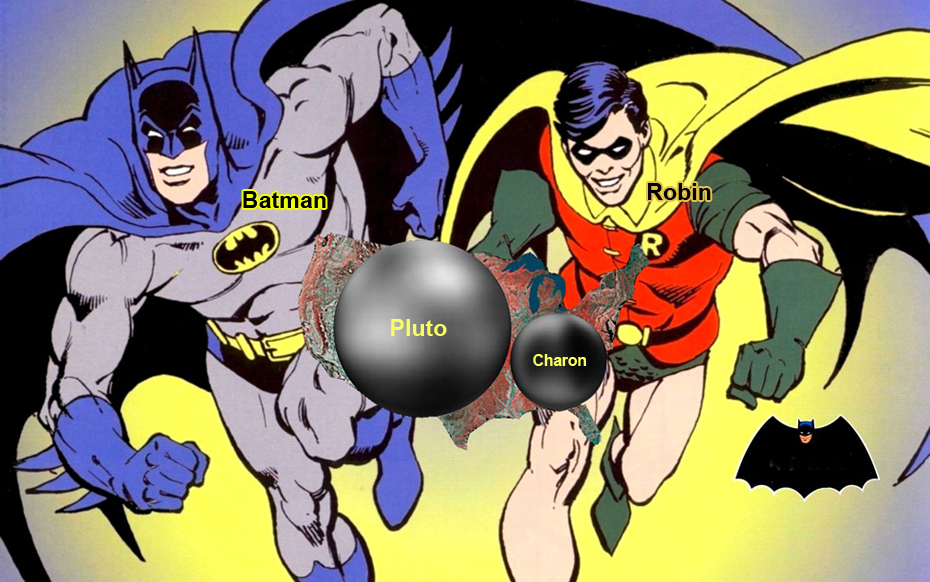
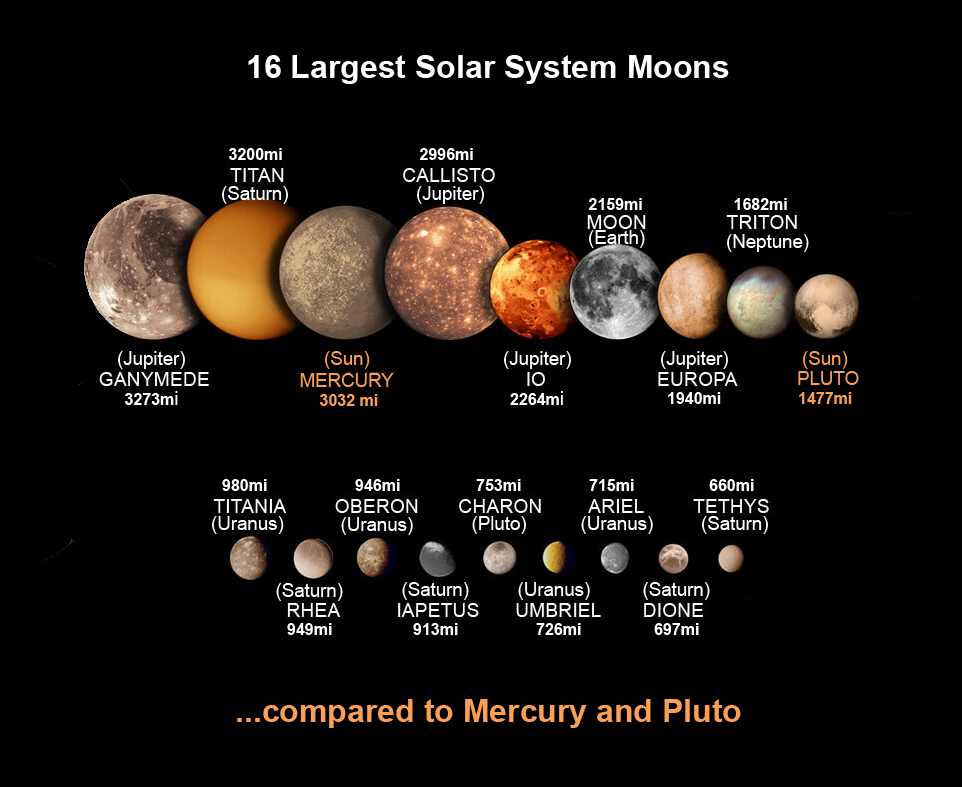 Were any of these moons to detach from their home or parent planet and assume independent orbits they would surely be considered planets with their own unique influences, but until then, they remain subject to the parent. Yes, they most likely have their own unique influences, but only from the home planet's perspective. From our Earth perspective, a planet and its moons are to be taken as one astrologically. One of the reasons Pluto is so powerful is because it is a double planet with its moon Charon half its size. They work together as a dynamic duo, like Batman and Robin, or the Green Hornet and Kato, strengthening one another and revolving around their common barycenter or balancing point, which is just outside of Pluto. Earth and its Moon are similar, but because we live on Earth, the Moon is seen or considered as a separate and independent influence. Both the Sun and Moon from a flat earth perspective, may in fact be satelites of the Earth. Mercury and Venus are a curious pair appearing to be satelites or "moons" of the Sun but are close enough to us to visually see them as separate objects. Mercury, Ceres, and the Dwarfs may have at some time in the past been the moons of some larger planet but now have independent orbits around the Sun.
 Astrology does not view the cosmos the way astronomy does. In astrology, the Sun, Moon, planets and stars are all within the dome above us, much closer and smaller than astronomers tell us, and this has been the belief for thousands of years. Yet astronomy is not without its merit. It helps us catalogue and measure the heavens and brings into view the modern and distant planets like Uranus, Neptune, and Pluto, which are important and legit astrological influences because of their independant orbits around the Sun The moons of the planets we know of don't have independent orbits around the Sun and are therefore not classified as planets, regardless of their size. That is the critical difference. Only when a body is free from its parent and orbits the Sun can it be considered a true planet and viable astrological influence. One day perhaps, Titan or Triton or one of the large moons of Jupiter may dislodge itself from their home planet, acquire its own orbit around the Sun, and then will become a new and independent planet and influence. Until then, they remain part and parcel of the the home planet itself, contributing in whatever way to it. |