On astro.com, Manuel Ignacio Quiles makes the case for adopting Ceres as the new ruler of Virgo
https://www.astro.com/astrology/in_mqceres_e.htm
The debate for Ceres/Virgo currently involves such notable figures in astrology as...
(English)Zipporah Dobyns, Demetra George, Robert Hand, Janet Kane, Zane Stein, Pat Paquette, Brynne Betz, Pat Paolucci, Eric Francis, James R. Lewis, and Amy Shapiro; (Spanish)Andrés Zaragoza, José Luis San Miguel de Pablos, Baptiste Le Bras, Jaume Baiget, Julia Almagro, Jorge Bosia, and Laura Graffigna; (Portuguese) Ludmila Souza, Graziella Marraccini, São Luz, and Léa Beatriz; (French) Jean de Larche, Ornella Petit, and Daniel Verney. And the list keeps growing.
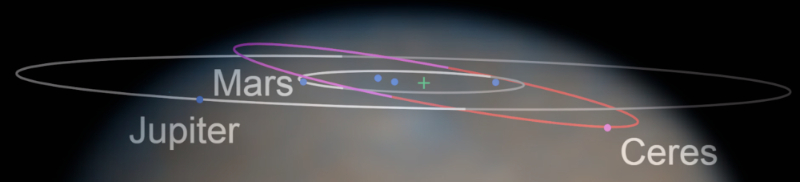
Ceres, Roman goddess of agriculture, was discovered in 1801 by Giuseppe Piazzi, in the asteroid belt between Mars and Jupiter. It has been
shown by astronomers in the 2000's to be perfectly spherical, even though it is only about 600 miles in diameter. The spacecraft Dawn, in 2015,
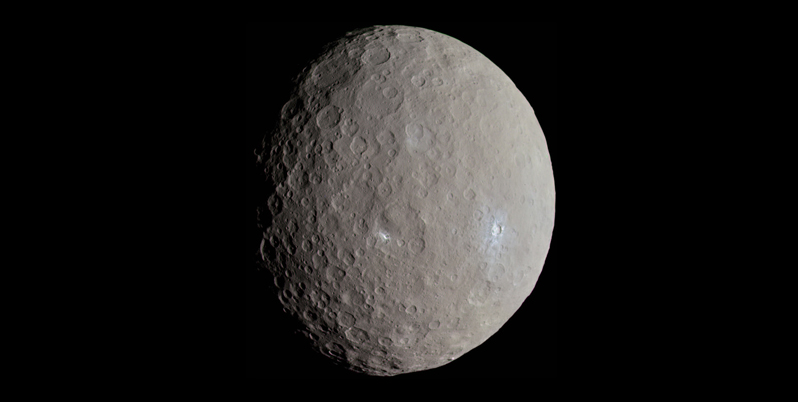
shows Ceres to be a heavily cratered lunar-like sphere. It is the lone inner solar system dwarf planet, having an orbit of 4.6 years, and an inclination
to the ecliptic of 10.6 degrees. Ceres fits the Titus-Bode law of 2.8 AU almost perfectly.
 Hubble image of Ceres in 2004 Dawn Image of Ceres in 2015 When the other large asteroids were discovered years later, Ceres fell from its planetary status to mere asteroid, catalogued as 1 Ceres(1852). In and around 2005, however, when Eris(Xena) and other small (dwarf) bodies were discovered, Ceres, along with Pluto, was reclassified as a dwarf or minor planet. Now, in 2026, many astrologers are seriously talking about making Ceres the official ruler of Virgo, leaving Mercury to Gemini. The idea of Ceres ruling Virgo goes back all the way to Marcus Manilius, the 1st century Roman poet, astrologer, and author, who in his volume Astronomica, associated Ceres with Virgo. Ceres is, after all, an agricultural goddess. The word cereal(grain) comes from Ceres. Manilius' assignation of the planets/gods to the signs is an interesting one. Some are similar to the modern day scheme while others are totally different. In his second book of Astronomica, Manilius assigns Pallas or Minerva to Aries, Cytheria or Venus to Taurus, Phoebus or Apollo to Gemini, Cyllenius or Mercury to Cancer, Jupiter to Leo, Ceres to Virgo, Vulcan to Libra, Mars to Scorpio, Diana (Moon?) to Sagittarius, Vesta to Capricorn, Juno to Aquarius, and Neptune to Pisces. What of the Sun and Saturn? Have they been lost in the translation? Ptolemy who came after Manilius gave us our current traditional assosciations: Sun for Leo, Moon for Cancer, Mercury for Gemini and Virgo, Venus for Taurus and Libra, Mars for Aries and Scorpio, Jupiter for Sagittarius and Pisces, and Saturn for Capricorn and Aquarius. It's nice and neat but vague as far as I'm concerned. Personally, I believe there should be one primary ruling planet or body for every sign. The invisible (to the naked eye) outermost planets are the answer to this, with the innermost planets ruling the first six signs and the outermost planets ruling the last six signs. Ceres (Demeter in Greek) is related to the physical mother who takes care of basic daily needs(food, clothing, shelter, etc.) in contrast to the emotional mother which is Cancer. When Pluto kidnapped Ceres' daughter Persephone or Prosepina, Ceres stood up to Pluto as an equal, and made the deal to have her released 6 months of the year. This shows the relationship between Virgo, Libra, and Scorpio, whose planetary rulers are the last to be discovered. Pluto was discovered in 1930, Eris in 2005, and Ceres reclassified in 2006. All of these bodies are small but significant. What about Barbera Hand Clow's Chiron, Lynne Koiner's Transpluto, or even intra-Mercurial Vulcan as candidates for Virgo rulers? These too are serious contenders and they can't all be right. Whether Ceres actually becomes the true ruler of Virgo is still uncertain, but there is a strong case for it. Same with Eris for Libra. So many possibilities. It's up to the astrological collective and further research to finally determine the answers to these questions. |